




In the contemporary business landscape, SEO has become a necessity to improve online presence. This has primarily been driven by the widespread use of the Internet to search for desired products or services. However, businesses often experience disappointment when SEO results take time to deliver measurable results.
The key is to know why SEO takes time to work by understanding the maths behind it. If you are looking for expert SEO services for your business, you can choose the best digital marketing company Siliguri or a location of your choice.
This blog will explain in detail what SEO is and why it takes time to work.
What Is SEO?
SEO stands for Search Engine Optimization, and it focuses on improving your website’s ranking on reputed search engines like Google through content and technical optimization. The higher ranking means your business will appear at the top of search results when people look for specific products, services, or information on Google.
Thus, the ultimate goal of SEO is to make it easier for search engine algorithms to discover and trust your site. Here are the main aspects of SEO that enhance your website's ranking and visibility:
- Technical SEO: This involves improving the technical aspects of your website, such as page load speed, mobile responsiveness, and connections.
- On-Page SEO: This focuses on optimizing individual website pages with targeted keywords, high-quality content, and clear headings.
- Off-Page SEO: This helps build external trust and authority for your website through high-quality backlinks from other reputed websites.
- User Experience (UX): This involves creating a clean and user-friendly site layout that keeps visitors engaged and reduces bounce rates.
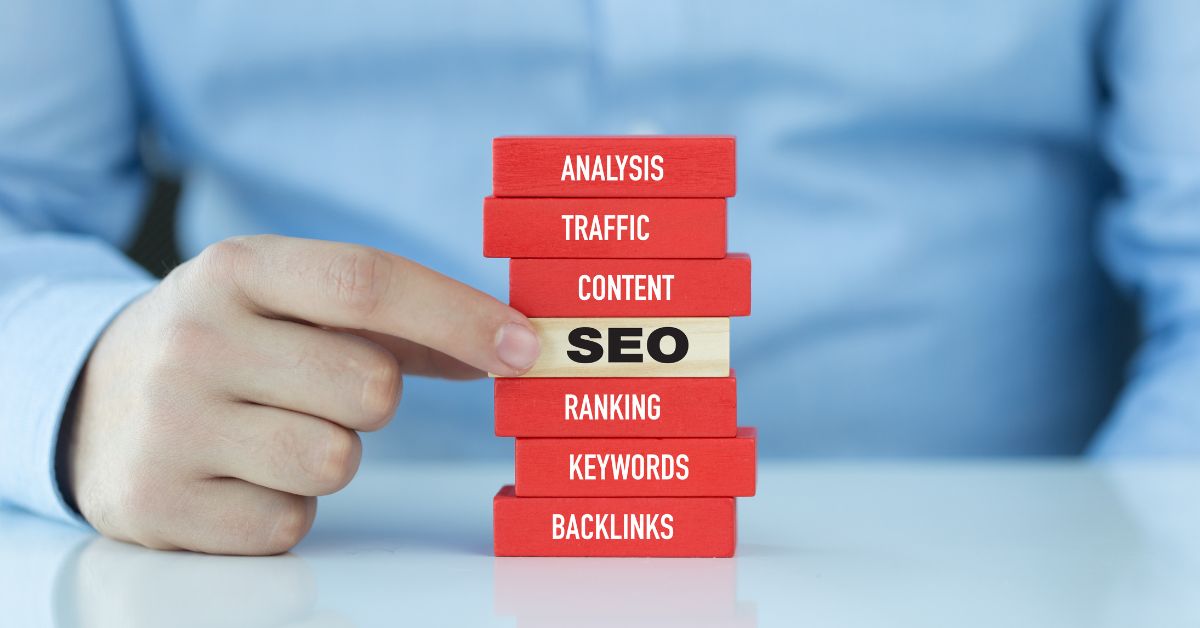
Know Why SEO Takes Time To Work
Here are the top reasons why SEO takes time to work and necessitates patience:
1. Extended Timeline of Indexing and Crawling: You need to understand that search engines cannot instantly discover and rank new websites. This is because Google uses bots, which are automated software programs that continuously browse the web. These bots move from page to page via links by a process known as crawling.
Once crawling is done, the content of the page is analyzed and added to Google's database. This process is known as indexing, and it might take several months for new websites to get discovered.
If your website does not have a proper layout, high-quality content, or is not mobile responsive, the bots will find it difficult to locate you. Therefore, your website will not appear in search results until Google successfully crawls and indexes your website content.
2. E-E-A-T Principle Analysis: Google evaluates the quality of web content based on the E-E-A-T principle, which stands for Experience, Expertise, Authoritativeness, and Trustworthiness.
It takes a significant amount of time to prove the credibility and authority of your website because Google’s algorithm follows a slow and structured process. The algorithm prioritizes external trust signals, such as citations from trusted sites and newspapers, along with credentials.
The process of fulfilling these authoritative signals takes a significant amount of time because Google does not immediately trust you, no matter how genuine your content is.
3. Testing of Search Algorithm: Google updates its ranking algorithms thousands of times every single year to improve search quality. When you optimize a page, Google does not immediately give you a permanent rank. Instead, the algorithm places your page in a temporary testing phase.
The algorithm intentionally moves your page up and down the search results pages to see how real human users interact with it. In addition, Google measures metrics like click-through rates and the duration of users staying on your page.
The process of collecting significant user data takes time because the algorithm needs hundreds of user interactions across different search queries to accurately evaluate your quality.
4. Domain Authority Establishment: Domain Authority (DA) is an indicator of how trustworthy and reliable search engines consider your website to be. Remember, when you launch a new website, you start with zero authority perception by Google.
Since Google is cautious about user value, it prioritizes ranking established brands that have a proven history of providing accurate, safe, and highly valuable information to users. For a new website to build trust, it takes a long-term track record of publishing top-tier content and maintaining optimal technical health.
Therefore, the key is for Google to perceive that your website content persistently delivers value for an extended period of time. Typically, it takes six months to a year of continuous efforts just to prove to search algorithms that your website is legitimate.
5. Overcoming Tremendous Competition: The direct competitors of your website likely invest heavily in digital marketing and SEO strategies. Thus, they might already possess high domain authority, deep backlink profiles, and hundreds of indexed pages that rank at the top of search results.
To make your website rank higher than your competitors on Google search engine results, you have to prove that your website is better, faster, and more authoritative than theirs. This can be achieved by strategically analyzing the existing gaps and creating superior content.
Since your competitors are constantly optimizing their content to maintain and improve their rankings, it takes several months of continuous optimization effort to get past them.
6. Backlink Profile Development Timeline: A backlink holds tremendous significance because it improves the trust of your website via another trusted site. Google considers backlinks as a strong indicator of credibility.
However, earning high-quality backlinks is one of the most time-consuming aspects of modern SEO. On the other hand, search engines heavily penalize artificial, spam, or paid link-building tactics. Thus, you need to create your links naturally.
The process of finding trusted platforms for backlinks requires extensive research, which makes it a slow process. If your link profile grows too rapidly or looks unnatural, it triggers search engine spam filters, which further delay your progress.
7. Keyword Competition & Search Volume: The specific keywords you choose to target have a massive impact on your overall SEO timeline. This is because high-search-volume keywords are fought for by millions of websites, which in turn makes them slow to rank.
If you target these highly competitive phrases, you should expect to wait a year or more to see meaningful first-page results. On the other hand, targeting lower search volume keywords or long-tail search queries generates much faster results.
An SEO expert targets low-competition keywords first to quickly build momentum and traffic. As your website gathers authority from these smaller wins, you gain the trust of algorithms to slowly target the highly competitive keywords.
8. Evaluation of User Behavior: Search engines strive to deliver the best possible answer to a user's query on the very first attempt. Thus, Google tracks long-term user behavior signals to determine if your page is delivering high-quality content to users.
The signals considered are dwell time, amount of time spent on your page, overall bounce rates, and scroll depth. If users click your link but leave within three seconds, Google thinks that your page did not satisfy their search intent.
Therefore, you need to focus on improving your website’s design, layout, readability, and information depth. However, the search engine needs time to gather a massive user sample size of traffic to evaluate user behavior.
9. Geographic Factors: If your business relies on local customers, your SEO timeline is tied directly to proximity, local citations, and regional reviews. Implementation of local SEO ensures that your Name, Address, and Phone number are perfectly mentioned in hundreds of web directories.
Search engine algorithms compare these business directories to verify that your physical company is legitimate, active, and located exactly where it claims to be. This digital cross-verification takes time to register across the web.
In addition, the algorithm of Google Maps relies heavily on the frequency, recency, and quality of your customer reviews. Therefore, it takes months of consistent customer service to establish a highly rated local presence.
10. Content Depth & Scaling: High-quality SEO requires a comprehensive library of deeply informative content. Writing just a few blog posts does not help in this regard. Hence, the key is to write a massive, central pillar page about a core subject, and then publish dozens of smaller, highly detailed supporting articles that link back to it.
It is a well-known fact that researching, writing, editing, and publishing this massive volume of high-quality content requires significant time and resources. If you upload hundreds of AI-generated, low-quality articles overnight, your website will be penalized because Google easily spots it.
Therefore, you need to optimize your content library naturally and maintain strict standards over months of commitment. The true power of SEO is unlocked when your content library is large enough to cover every single aspect of user search intent related to your industry.
Final Thoughts
Patience and consistency are two essential factors of a successful SEO strategy. This is because Google makes it mandatory for every website to achieve a higher ranking through quality content and an enhanced user experience. Remember, shortcuts and automated tricks get penalized in the long run and damage your search engine credibility.
By choosing the best digital marketing company Siliguri, such as Cyber Help India, you can achieve organic SEO growth with sustained authority.
